About Mike King
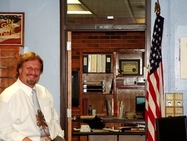
Mike King is a graduate from the University of Oklahoma in Public School Administration and has been a teacher and principal for thirty-two years. Under his tenure, his schools have been recognized as exemplary by the Oklahoma State Department of Education and named a National School of Excellence by the U.S. Department of Education. He has also been individually recognized as the 2005 finalist for the Oklahoma Medal of Excellence Award Educational Administration and was a finalist for the 2005 Association of Professional Oklahoma Educators Foundation Award in
Educational Administration.
|
His technical experience has been recognized by the Goddard Foundation for documentary filmmaking, USA Today’s “Best Bet” educational website, and the Oklahoma State Senate for participation in Operation School Net. He has presented workshops for a variety of local, state, and national groups and at the National Staff Development Council’s annual conference. He has served as an adjunct professor at the graduate school of education at Oklahoma University and Northwestern Oklahoma State University.
|
|
He has co-authored several published supplements for his book “Developing School Programs and Policies” which include: “A Guide to Developing Human Resources”, “Building Bridges of Trust”, “Developing a Safe and Healthy School Environment”, “Developing A Learning School” and “The Virtual Schoolhouse”. Mike and his wife Sheralyn currently live in Dodge City Kansas, where he has served for three years as a Middle School principal. Mike currently serves on the board of directors for Kansas Administrators Middle School Association.
Mike King Named 2010
|
National School of Excellence
|
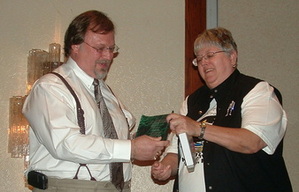
Mike King on Creativity
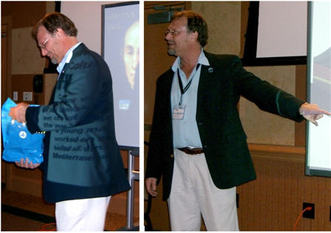
Awarded STAR Discovery Educator 2007
In most of us there lies a realm of creativity especially within children. Products of creativity are within all of us and the expression of divergent thought can be framed in both its quality to originality and appropriateness. Each of us would like to take claim to the originality of a creative idea but here lies the problem of appropriateness: to be acceptable in creativity you must also be forthcoming in originality. In my last in-service I explored the idea of creativity and the Digital Native. I asked the question to my audience who were mostly teachers, “Where do you think the Digital Native becomes creative with technology?”A long pause fell over the room as I studied each individual and looked for a glimmering eye that I could recognize for a response. As I scanned the room for an answer most heads were ducking. The answer I was to expand upon now emerged from the back of the room with a reply of; “From home in the confines of their unsupervised room.” Now with the answer emerging I structured my next response with another expository; “Where is it that the Digital Native spends most of their time?”
The answer was given simultaneously from the room like a choir singing out the chorus lines of My Space and You Tube. The point of the two questions was to bring out the idea that most technology and creative development is being experienced at home, in most cases unsupervised. A discussion then followed on how there is a huge gap between the digital native and the digital immigrant and that the digital immigrant reserves the idea of technology integration because they may no longer be the masters of content. In fact the Digital Native becomes the master of content when introducing technology into the classroom. Yet, by not introducing technology into the classroom we deprive so many students a constructive way to develop the tools of technology to enhance their world in a positive social environment that strengthens learning and the collaborative expansion of knowledge.
So what becomes the answer to this gap between the digital native and the classroom teacher who may be the digital immigrant? The answer is simple, become a facilitator of learning and not a master of content when it comes to technology. Additionally teachers should familiarize themselves with places where students can go on the World Wide Web to be both productive and creatively appropriate.
The answer was given simultaneously from the room like a choir singing out the chorus lines of My Space and You Tube. The point of the two questions was to bring out the idea that most technology and creative development is being experienced at home, in most cases unsupervised. A discussion then followed on how there is a huge gap between the digital native and the digital immigrant and that the digital immigrant reserves the idea of technology integration because they may no longer be the masters of content. In fact the Digital Native becomes the master of content when introducing technology into the classroom. Yet, by not introducing technology into the classroom we deprive so many students a constructive way to develop the tools of technology to enhance their world in a positive social environment that strengthens learning and the collaborative expansion of knowledge.
So what becomes the answer to this gap between the digital native and the classroom teacher who may be the digital immigrant? The answer is simple, become a facilitator of learning and not a master of content when it comes to technology. Additionally teachers should familiarize themselves with places where students can go on the World Wide Web to be both productive and creatively appropriate.
Digitally Changing EducationCo-Creating may become one of the most powerful engines of change and innovations that the education world will experience. Co-Creating with other educators across the nation is like tapping a knowledge pool of similar interest, a reservoir of creativity that may emerge through an enthusiastic wealth of talent producing warehouses of digital knowledge. It will not be an easy change and many tough challenges lie ahead to offset the standardized models of the existingrigors of traditional education.
Co-Creating Video by Mike King |
|
Engaging Digital LessonsIncorporating technology in the classroom effectively, teachers must use those strategies that are directly aligned to practices that engage students in higher levels of direct learning and the development of critical thinking skills. In this video by Mike King he describes the importance of using digital tools as a reference to the creative expression. This potential to release creative expressions through digital tools should be the focus of what educators see as important to the overall development of 21st Century learners.
|
|
March 22, 2006
EPS technology department works on variety of projects
By Cass Rains
News and Eagle Wed Mar 22, 2006, 03:48 PM CST
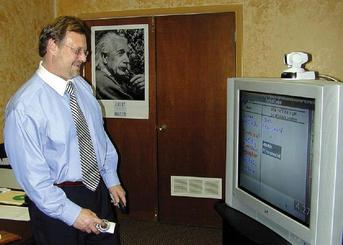
With the pace ever quickening in the advancement of technologies, Mike King and his staff have their work cut out for them.
King, the director of Information Technology, has been working to bring the school district technology to the forefront, matching the sophistication of other schools in the state, or passing them.
King uses a meeting agenda to show the eight items the 7-month-old IT department has been working on. “One of the biggest projects introduced this year was the increase of bandwidth,” he said. “New state Department of Education mandates have been passed for online testing.” Formerly running at about 128 kilobytes per second, the EPS’ old system was “... not able to accomplish what the state wanted.” With help from Southwestern Bell, now AT&T;, King said the district’s bandwidth is about 100 megabytes, or 1,000 kbps.
Along with all the new technologies, teachers will be the ones learning how to integrate the use of the technologies into their classrooms and curriculums and operate the equipment. Select link for full article "EPS technology department works on variety of projects"
King, the director of Information Technology, has been working to bring the school district technology to the forefront, matching the sophistication of other schools in the state, or passing them.
King uses a meeting agenda to show the eight items the 7-month-old IT department has been working on. “One of the biggest projects introduced this year was the increase of bandwidth,” he said. “New state Department of Education mandates have been passed for online testing.” Formerly running at about 128 kilobytes per second, the EPS’ old system was “... not able to accomplish what the state wanted.” With help from Southwestern Bell, now AT&T;, King said the district’s bandwidth is about 100 megabytes, or 1,000 kbps.
Along with all the new technologies, teachers will be the ones learning how to integrate the use of the technologies into their classrooms and curriculums and operate the equipment. Select link for full article "EPS technology department works on variety of projects"
Emergence of Digital MediaIn the near future, technology-based learning applications will put more diverse educational resources at the fingertips of teachers, while simultaneously connecting them with the availability to create and to integrate content. These resources for combining technology into traditional content are presently on the verge of exploration and will soon emerge as a new paradigm shift for teaching and learning.
|
|
This paradigm shift will occur with the emergence of digital media as teachers discover innovative ways to create interactive lessons by mixing of content through the application of open source software resources, and by providing collaborative learning environments through social networking opportunities.To ensure a brighter future for students, educators are examining their traditional practices in an effort to kindle a spirit that unites a multitude of technological resources into a well-designed technology based interactive learning environment.