Did You Know 3.0In the new realm of technology exspansion educators must be cognizant that the World is changing at a faster rate than ever before, even the great expansion of the Roman Empire does not compare to the evolution of technologies now being experienced in this generation.1 This great technological expansion and the use of interactive collaborative global networks, educators must ensure a brighter future for students, by examining their traditional practices in an effort to expand beyond the status quo and kindle a spirit that unites well-designed Web 2.0 learning environments.
|
|

It should be the mission of those who design pedagogy for the next generation to develop and embrace a richer conception of human capacity through Literacy 2.0 tools we currently have available for the expansion of enriched learning environments. These same designers must also remain forward thinking continually adapting their pedagogy to new developmental trends in technology and the constant flattening of the world through its interconnectedness.
PodcastingPodcasts enable students and teachers to share information with anyone anytime. If a student is absent, she can download the podcast of the recorded lesson. It can be a tool for teachers or administrators to communicate curriculum, assignments and other information with parents and the community. Teachers can record book talks, vocabulary or foreign language lessons, international pen pal letters (podcast pals!), music performance, interviews, debates. Podcasting can be a publishing tool for student oral presentations. It also allows people to leave a journal. The initials “RSS” are variously used to refer to the following standards:1. Really Simple Syndication (RSS 2.0) 2.Rich Site Summary (RSS 0.91, RSS 1.0) 3. RDF Site Summary(RSS 0.9 and 1.0)
|
|
RSS formats are specified in XML (a generic specification for data formats). RSS delivers its information as an XML
file called an “RSS feed,” “webfeed,” “RSS stream,” or“RSS channel”.
Why use podcasts?
1. Podcasts enable students to share their knowledge and expertise with others through a creative outlet.
2. Podcasts tap into a mode of media input that is commonplace for digital natives.
3. Podcasts empower students to form relationships with the content and each other in relevant ways.
How can podcasts be used?
1. In the classroom, educators and students can use podcasts to inform others about class news, current events, and areas of interest.
2. Students can use a podcast forum to persuade their peers to help others, make a difference, or try something new.
3. Podcasts can also be used to edutain others through creative narratives
How can podcast enhance language skills?
1. Podcasts engage students in thinking critically about their speaking fluency and communication skills.
2. The opportunity to create a podcast about what students would like to discuss and share with others is extremely motivating.
file called an “RSS feed,” “webfeed,” “RSS stream,” or“RSS channel”.
Why use podcasts?
1. Podcasts enable students to share their knowledge and expertise with others through a creative outlet.
2. Podcasts tap into a mode of media input that is commonplace for digital natives.
3. Podcasts empower students to form relationships with the content and each other in relevant ways.
How can podcasts be used?
1. In the classroom, educators and students can use podcasts to inform others about class news, current events, and areas of interest.
2. Students can use a podcast forum to persuade their peers to help others, make a difference, or try something new.
3. Podcasts can also be used to edutain others through creative narratives
How can podcast enhance language skills?
1. Podcasts engage students in thinking critically about their speaking fluency and communication skills.
2. The opportunity to create a podcast about what students would like to discuss and share with others is extremely motivating.
|
|
|
Resources for Podcasting
Podcasting has many educational benefits. Tony Vincent has created an excellent resource blog for learning how
to create a podcast. On his site Learning at Hand he outlines four steps to creating a podcast: preproduction, recording, postproduction, and publishing. To learn more about podcasting visit Learning at Hand and download several podcasting help guides, on how to create podcast that support curriculum integration.
Tony Vincent Podcasting Booklet for Teachers and Students
Listen To: Three Little Pig PodCast (The narrative is an overview of the science of PodCasting and its potentials for educational integration)
Podcasting for Educators
A page of links from the PiNet digital library of David F. Warlick
Educator Podcast Network
Gcast A Podcasting Service
PodNova is a place to find podcasts, videoblogs and stay informed on your favouriteblogs. With
PodNova you can subscribe, listen, view, read and maintain your feeds online.
The Internet Archive is a 501(c)(3) non-profit that was founded to build an Internet library, with the purpose of
offering permanent access for researchers, historians, and scholars to historical collections that exist in digital format.
Intro to Podcasting - Secondary Teachers.pdf
Intro to Podcasting - World Languages.ppt
to create a podcast. On his site Learning at Hand he outlines four steps to creating a podcast: preproduction, recording, postproduction, and publishing. To learn more about podcasting visit Learning at Hand and download several podcasting help guides, on how to create podcast that support curriculum integration.
Tony Vincent Podcasting Booklet for Teachers and Students
Listen To: Three Little Pig PodCast (The narrative is an overview of the science of PodCasting and its potentials for educational integration)
Podcasting for Educators
A page of links from the PiNet digital library of David F. Warlick
Educator Podcast Network
Gcast A Podcasting Service
PodNova is a place to find podcasts, videoblogs and stay informed on your favouriteblogs. With
PodNova you can subscribe, listen, view, read and maintain your feeds online.
The Internet Archive is a 501(c)(3) non-profit that was founded to build an Internet library, with the purpose of
offering permanent access for researchers, historians, and scholars to historical collections that exist in digital format.
Intro to Podcasting - Secondary Teachers.pdf
Intro to Podcasting - World Languages.ppt
Old West Podcast by Mike King
Thomas J. Hueston : Oliver Yantis Shootout
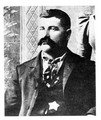
In 1892, Doolin formed his own gang, the Wild Bunch. On November 1, 1892, the gang robbed a bank in Spearville, Kansas. After the robbery, the gang fled with gang member Oliver Yantis to Oklahoma territory, where they hid out at the house of Yantis' sister. Less than one month later, the gang was tracked to that location, and in a shootout Yantis was killed while the rest of the gang escaped. Deputy Marshal Hueston, Deputy Marshal Richard Speed and Deputy Marshal Lafayette Shadley were shot and killed during a gunfight with a group of seven outlaws in Ingalls, Oklahoma Territory.
James Masterson: The Dodge City Shootout
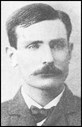
James Masterson worked on the western frontier as a buffalo hunter with his brothers.He became Assistant Marshal in Dodge City, Kansas in June 1878. In this story James Masterson reflects back to April 9, 1878, when Ed Masterson James Masterson's brother was shot and killed attempting to disarm a drunken cowboy, Jack Wagner. James later moved to Guthrie, Oklahoma, and became a Deputy Sheriff of Logan County, Oklahoma. On September 1, 1893, where part three of the story takes pace as he was involved in the Battle of Ingalls as a Special Deputy US Marshal, a gunfight in Ingalls, Oklahoma against the Doolin-Dalton gang, and was responsible for the capture of gang member "Arkansas Tom" Jones.
Bill Doolin: Gunfight at Ingalls
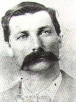
On September 1, 1893, fourteen deputy U.S. Marshals entered Ingalls, Oklahoma, to apprehend the gang, in what would be known as the Battle of Ingalls. During the shootout that followed, three marshals were killed, two bystanders were killed and one wounded, three of the gang members were wounded, and gang member "Arkansas Tom Jones" was wounded and captured. Doolin shot and killed Deputy Marshal Richard Speed during that shootout.
A Podcast of Children Stories
|
The Princess and the Crystal Mountain: Many years ago, in an enchanted land, on the highest peaks of Skanderna lived a great King. He was a vibrant King with a surge of human compassion. He wanted nothing more than to live his life free from the cares of an unjust world. His bravery showed true courage and he held a chivalric sentiment for honor, justice and righteousness. He was a fierce protector of his people, matchless in majestic refinement and a relentless hunter. (This story was writen and produced by Mike King and narrated by Sheralyn King.
|
In one tale, Br'er Fox constructs a doll out of a lump of tar and dresses it with some clothes. When Br'er Rabbit comes along he addresses the tar "baby" amiably, but receives no response. Br'er Rabbit becomes offended by what he perceives as the Tar Baby's lack of manners, punches it, and in doing so becomes stuck. The story was originally published in Harper's Weekly by Robert Roosevelt; years later Joel Chandler Harris wrote of the tar baby in his Uncle Remus stories. (This story was produced and narrated by Mike King)
|